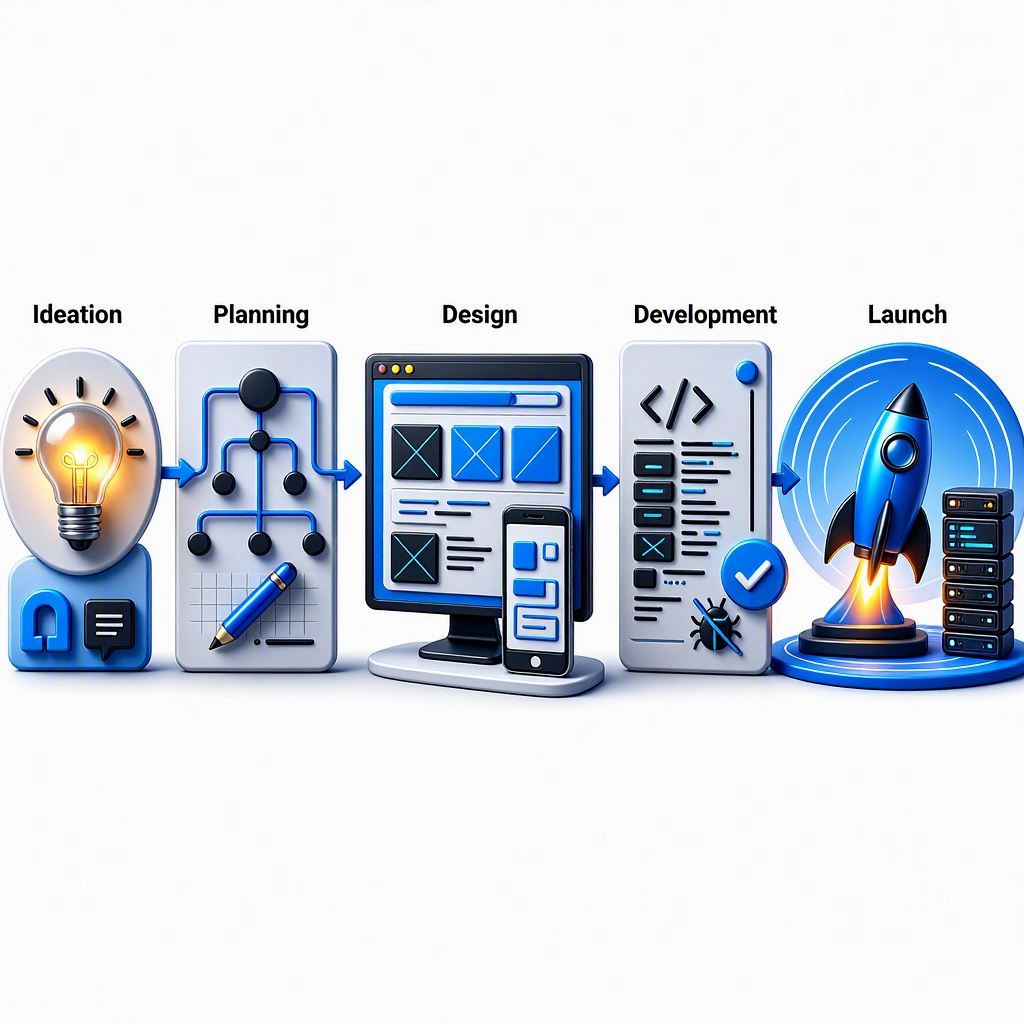
Building a professional website involves much more than choosing a design and adding content. A successful website follows a structured development process that ensures it is visually appealing, user-friendly, fast, secure, and capable of helping your business achieve its goals.
Whether you’re launching your first website or redesigning an existing one, understanding the website development process can help you make informed decisions and ensure a smoother project experience.
Step 1: Understanding Your Business Goals
Every successful website starts with understanding the business behind it.
Before any design or development begins, it’s important to identify:
- Your business objectives
- Your target audience
- The products or services you offer
- Your competitors
- The purpose of the website
Some businesses need a simple company profile website, while others require ecommerce functionality, appointment booking, custom dashboards, or customer portals.
A clear understanding of these requirements helps create the right strategy from the beginning.
Step 2: Planning the Website Structure
Once the project requirements are clear, the next step is planning the website structure.
This includes creating a sitemap that outlines all the important pages, such as:
- Home
- About Us
- Services
- Products
- Portfolio
- Blog
- Contact
A well-planned structure improves navigation, user experience, and search engine optimization.
Step 3: Wireframing and User Experience
Before visual design begins, many projects start with wireframes.
Wireframes are simple layouts that define:
- Page structure
- Navigation
- Content placement
- Call-to-action buttons
- User flow
Planning the user experience early helps create a website that is intuitive and easy to use.
Step 4: UI Design
With the structure finalized, the visual design is created.
This stage includes:
- Brand colours
- Typography
- Icons
- Images
- Layout design
- Mobile responsiveness
The objective is to build a professional appearance while maintaining consistency across every page.
Step 5: Website Development
After the design is approved, development begins.
Depending on the project, developers may use technologies such as:
- WordPress
- WooCommerce
- Shopify
- PHP
- Laravel
- React
- Next.js
- JavaScript
- MySQL
During development, every section of the website is transformed into a fully functional experience.
Step 6: Content Integration
Content is one of the most important parts of any website.
This includes:
- Company information
- Service descriptions
- Product details
- Images
- Blogs
- Contact information
- Frequently Asked Questions
Well-written content improves user engagement and helps search engines understand your website.
Step 7: SEO Optimization
Search engine optimization should be incorporated during development rather than after launch.
Typical SEO improvements include:
- SEO-friendly URLs
- Optimized page titles
- Meta descriptions
- Heading structure
- Image optimization
- Internal linking
- Schema markup
- XML sitemap
- Robots.txt configuration
These elements help improve your website’s visibility on Google.
Step 8: Testing and Quality Assurance
Before launching the website, everything should be tested thoroughly.
Testing includes:
- Mobile responsiveness
- Browser compatibility
- Page speed
- Forms
- Buttons
- Navigation
- Security
- Broken links
A properly tested website provides a better experience for visitors.
Step 9: Website Launch
Once testing is complete, the website is deployed to the live server.
This stage includes:
- Domain configuration
- SSL installation
- Hosting setup
- Performance optimization
- Google Analytics integration
- Google Search Console setup
- XML sitemap submission
The website is now accessible to customers worldwide.
Step 10: Ongoing Maintenance and Growth
Launching a website is only the beginning.
Regular maintenance ensures your website continues to perform well.
This includes:
- Security updates
- Plugin updates
- Performance monitoring
- Content updates
- SEO improvements
- Regular backups
- Bug fixes
Keeping your website updated helps maintain security, improve performance, and support long-term business growth.
Why Choose Crazy Geeks?
At Crazy Geeks, we follow a structured website development process that focuses on quality, performance, and business growth. From understanding your requirements to launching a fast, responsive, and SEO-friendly website, we work closely with every client to deliver solutions tailored to their goals.
Whether you need a business website, ecommerce platform, portfolio website, or custom web application, our team is committed to creating websites that provide long-term value and help your business establish a strong online presence.
Final Thoughts
A professional website is more than just an online presence. It is a powerful business tool that can build credibility, generate enquiries, and support long-term growth.
Following a well-planned website development process ensures your project stays organized, reduces unnecessary revisions, and results in a website that performs effectively across all devices.
If you’re planning your next website project and are looking for a Website Development Company in Mumbai, our team at Crazy Geeks can help you transform your ideas into a fast, responsive, and SEO-friendly website tailored to your business goals.